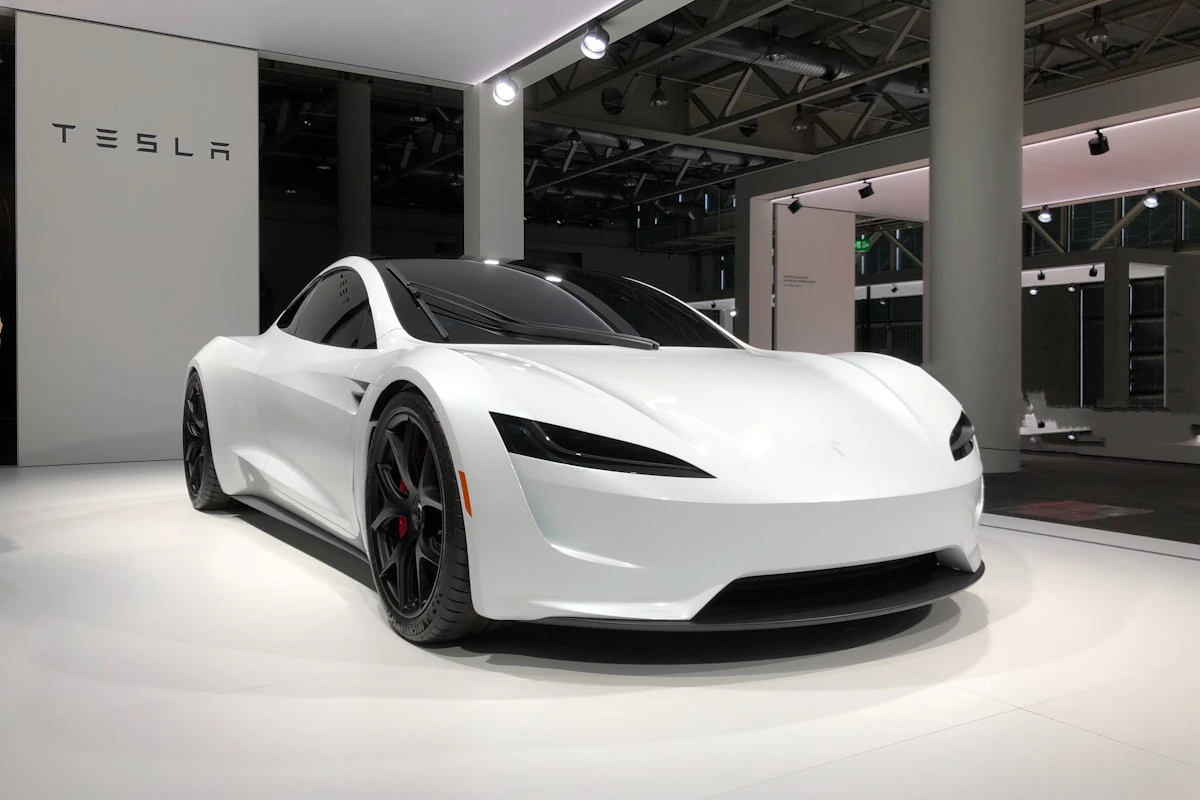
Figure 1: The transition to Agentic AI in vehicle architecture running on centralized high-performance neural computing systems.
Advanced Multi-Agent Orchestration with Gemini 3: From Theory to Production in Automotive Systems
The automotive industry is experiencing a seismic paradigm shift that transcends traditional hardware boundaries. We are no longer just looking at software-defined vehicles; we are witnessing the dawn of the autonomous cognitive mobility era. The evolution from static Large Language Models (LLMs) to fully autonomous AI agents represents the most pivotal shift in software engineering since the cloud revolution. While many legacy systems can build a basic, reactive chatbot, creating a production-grade Multi-Agent System (MAS) that is reliable, highly scalable, and self-correcting requires moving entirely beyond simple prompts. In the context of modern automotive engineering, implementing Agentic AI in vehicle architecture is becoming the foundational benchmark for the next generation of intelligent transport.
By leveraging advanced cognitive frameworks like Gemini 3 on enterprise ecosystems such as Google Cloud Vertex AI, engineers can now design onboard and cloud-coupled systems that do not just "talk" to the user, but actively "act" and execute tasks with a level of reasoning previously considered unattainable. This paradigm redefines how vehicles process sensor data, manage internal system telemetry, and interact with passengers. To fully understand this transformation, we must explore how underlying computing designs are changing. For a deep dive into the hardware enabling this, see our comprehensive analysis on The Neural Engine: How AI is Redefining Vehicle Architecture in 2026.
1. The Anatomy of an Enterprise-Grade Automotive Agent
A robust, automotive-grade AI agent is fundamentally distinct from a simple API wrapper or a linear script. It is an advanced reasoning engine capable of iterative, closed-loop problem-solving. While a standard LLM provides a direct, single-turn output based on immediate textual input, a Gemini 3-powered agent operates within a sophisticated, multi-layered ReAct (Reason + Act) framework. This framework forces the system to continuously balance conceptual thought processing with practical tool execution, making it perfect for handling dynamic vehicular environments.
The Inner Workings: The Cognitive Cycle
The cognitive loop of an enterprise agent deployed within a modern vehicle architecture follows a strict four-stage cycle that ensures no action is taken blindly. This rigorous loop includes:
- Contextual Perception: The agent continuously ingests the user's intent or automated systemic triggers. It then enriches this raw input with critical metadata fetched from internal vector databases via Retrieval-Augmented Generation (RAG) or real-time automotive APIs (e.g., CAN bus telemetry, cabin cameras, and external environmental sensors).
- Strategic Reasoning: Built natively on Gemini 3, the agent utilizes advanced Chain-of-Thought (CoT) prompting structures to decompose a highly complex, multi-variable objective into a structured, directed acyclic graph (DAG) of smaller, manageable tasks. It maps out its dependencies before interacting with any vehicle subsystem.
- Tool Execution: The agent autonomously selects and invokes the optimal tools required to solve the current step in the DAG. This could range from executing a localized Python interpreter for complex battery thermodynamic data analysis, to querying an encrypted SQL connector for historical component diagnostics.
- Self-Correction (The Feedback Loop): Unlike old-school software, the agent doesn't crash when an unexpected exception occurs. It carefully observes the tool's raw output. If an anomaly or error is detected, it triggers its internal self-correction mechanism, re-plans its downstream strategy, and adapts its path instead of failing the user or the vehicle infrastructure.
This continuous feedback loop turns a standard vehicle into a highly reflective system. Instead of relying purely on fixed, pre-compiled code rules, the integration of deep learning logic allows the car to evaluate abstract scenarios. This explains the industry-wide transition detailed in The "Brain" Behind the Wheel: Why Neural Networks are Replacing Traditional Sensors, where deterministic rule-based modules are being swapped out for cognitive AI layers.
2. System Architecture: The Orchestrator-Worker Model
To scale these advanced cognitive capabilities across an entire connected car network without suffering from performance degradation, engineers must completely move away from "Monolithic Agents." A single AI agent trying to handle speech processing, path planning, mechanical diagnostics, and cabin climate optimization simultaneously suffers heavily from context drift, high token consumption, and unacceptable operational latency. The industry standard solution is a decoupled, Modular Multi-Agent Architecture.
TECHNICAL ARCHITECTURE MAP: MULTI-AGENT SYSTEM (MAS)
[User Intent / Complex Goal]
│
▼
┌────────────────────────────────────────────────────────┐
│ ORCHESTRATOR / MANAGER AGENT (Gemini 3-Powered) │
│ - Goal Decomposition - Task Delegator │
│ - Goal Parser - Final Aggregator │
└────────────┬──────────────┬──────────────┬─────────────┘
│ │ │
┌────────┴──────┐ │ ┌──────┴────────┐
▼ ▼ ▼ ▼ ▼
┌──────────────┐ ┌──────────────┐ ┌──────────────┐ ┌──────────────┐
│ DATA SCIENTIST│ │ RESEARCHER │ │ CODER │ │LEGIT AUDITOR │
│ AGENT │ │ AGENT │ │ AGENT │ │ AGENT │
└──────┬───────┘ └──────┬───────┘ └──────┬───────┘ └──────┬───────┘
│ │ │ │
▼ ▼ ▼ ▼
[Managed Tools & Services: Vector DB (RAG), SQL Connectors, Python, APIs]
Under this multi-agent paradigm, roles are clearly segregated into highly specialized components:
- The Orchestrator (The Brain): A high-reasoning Gemini 3 instance that parses the primary user request, extracts the underlying intent, breaks it down, and delegates optimized sub-tasks to the specialist workers. It monitors the entire execution pipeline and performs the final synthesis of data.
- The Specialist Workers (The Hands): Lightweight, highly optimized agents configured for hyper-specific domains. For instance, a Data Scientist Agent focuses exclusively on telemetry regressions; a Coder Agent generates code to patch edge-case system integrations; and a Legal/Compliance Auditor Agent ensures all planned actions adhere to strict automotive safety standards.
- The Communication Bus: A highly structured, asynchronous data interface (typically JSON-based over high-speed internal vehicle protocols) that ensures seamless, low-latency data flow and message passing between active agents.
Editor's Top Safety Choice
REDTIGER F7NP 4K Front and Rear Car Dash Camera
Enhance your driving safety and secure absolute proof on every journey with the ultimate smart co-pilot. The REDTIGER F7NP features stunning 4K front-facing and 1080P rear video quality to capture the finest roadside details.
🚀 Dual STARVIS Sensors: Advanced STARVIS 2 sensor for incredible clarity.
🌙 WDR Night Vision: Wide F1.5 aperture & 6-layer optical lens balance lights/shadows.
⚡ 5.8GHz Ultra-Fast Wi-Fi: Connect to the Smart App for high-speed downloads up to 20Mbps.
📸 Complete Coverage: Wide-angle fields of view (170° front and 140° rear).
🎁 Bonus Included: Free Memory Card packed right inside the box.
,
By implementing this distributed layout, Agentic AI in vehicle architecture balances workloads perfectly. This setup allows computationally heavy operations to run safely without interrupting real-time control safety loops. This is critical for moving toward full vehicle autonomy. When cars can independently analyze, write internal diagnostic scripts, and adjust parameters on the fly, they evolve from passive machines into self-contained entities. This radical transformation is explored further in The End of Driving: How Generative AI is Creating 'Thinking Cars' in 2026.
3. Deep-Dive into Technical Components & Platform Implementations
Building this intricate framework requires enterprise tools that bridge the gap between abstract AI processing and physical hardware. Google Cloud Vertex AI Agent Builder provides enterprise-grade grounding out of the box, ensuring your deployed agents rely strictly on specific, verified internal datasets rather than hallucinating answers. This is highly analogous to the predictive modeling structures discussed in The future of maintenance: How will your next car diagnose its problems using "neural networks"?.
Let us look at how an engineer would configure an autonomous agent using a Python SDK setup to handle real-time vehicle fault triage and planning on Vertex AI:
# Production Script: Initializing Automotive Multi-Agent System Core
from google.cloud import aiplatform
from google.cloud.aiplatform.v1beta1 import VertexAgentBuilder
import json

def initialize_automotive_orchestrator(project_id: str, location: str):
    aiplatform.init(project: project_id, location: location)

    # Configure the Gemini 3 High-Reasoning Automotive Engine
    agent_config = {
        "display_name": "Vehicle_Orchestrator_Core",
        "model": "gemini-3-pro-automotive-v1",
        "system_instruction": (
            "You are the central Orchestrator Agent inside the vehicle architecture. "
            "Your role is to ingest complex cabin intents, sensor alerts, and diagnostics. "
            "Decompose goals using Chain-of-Thought (CoT) and delegate tasks to specialized "
            "worker agents (Data Scientist, Coder, Auditor). Always use the ReAct loop to self-correct."
        ),
        "generation_config": {
            "temperature": 0.1,  # Low temperature ensures deterministic reasoning
            "top_p": 0.95,
            "max_output_tokens": 8192
        }
    }

    # Define managed real-time vehicular tools
    managed_tools = [
        {"name": "can_bus_telemetry_fetcher"},
        {"name": "python_interpreter_runtime"},
        {"name": "safety_compliance_validator_sql"}
    ]

    print("[INFO] Initializing Multi-Agent System via Vertex AI...")
    # Code would proceed to build and deploy the agent instance to the onboard central computer
    return {"status": "SUCCESS", "agent_name": agent_config["display_name"]}

# Example trigger execution
# initialize_automotive_orchestrator("future-tech-car-2026", "us-central1")
To successfully run this level of multi-agent execution directly inside a vehicle, the underlying hardware must feature ultra-high throughput and extreme parallel processing capabilities. Standard automotive chips fall short. This is why the integration of Agentic AI in vehicle architecture relies heavily on advanced platforms like NVIDIA's Drive Thor SoC, which allocates dedicated tensor cores specifically for executing complex agentic loops without experiencing packet loss. To learn more about this hardware stack, read The Neural Engine: How AI and NVIDIA Drive Thor Are Redefining Vehicle Architecture.
4. Production Realities & Mitigating System-Level Risks
Moving multi-agent systems from experimental software simulations to real-world production tracks introduces significant engineering hurdles. Safety is non-negotiable in the automotive sector. If a software agent hallucinates a parameter during a critical powertrain recalibration, the consequences can be catastrophic. Therefore, engineers deploying Agentic AI in vehicle architecture must focus heavily on three major production pillars:
| Production Challenge |
Underlying Threat Vector |
Enterprise Mitigation Strategy |
| Infinite ReAct Loops |
Agent continuously self-corrects without resolving the core error, draining computing power. |
Enforce a strict, hard-coded execution limit (Max Iterations = 5) and trigger fallback recovery modes. |
| Context Drift / Bloat |
Long-running diagnostic tasks fill up the window with redundant logs, degrading token processing. |
Implement dynamic token compression and summarization steps between conversational agent handoffs. |
| Tool Execution Security |
An autonomous Python script could inadvertently attempt to overwrite core safety-critical memory. |
Isolate all runtime environments within secure gVisor sandboxes with strict, read-only system access. |
5. The Road Ahead: Autonomous Cognitive Mobility
As we look ahead, the role of Agentic AI in vehicle architecture will continue to expand beyond localized cabin workflows. Future frameworks point toward multi-vehicle collaborative agent networks. In these setups, the orchestrator agent inside one car can independently communicate, negotiate, and share real-time telemetry data with orchestrator agents in surrounding vehicles. This allows them to cooperatively map out optimal traffic patterns, manage intersection routing, and identify localized structural hazards without requiring central cloud intervention.
By structuring vehicular systems as a collection of specialized, highly reflective agents, automakers can easily deploy over-the-air (OTA) updates to individual worker modules. This means you can upgrade a car's diagnostic capabilities or optimize its climate control agent without having to re-certify the entire firmware stack. The future of automotive engineering isn't just about adding more raw power under the hood; it is about refining the distributed cognitive architecture that manages every turn, every calculation, and every safety loop behind the scenes.


Comments
Post a Comment
We welcome your opinions and constructive discussions.