Author: Rabie Abdulrahman | Industry Focus: Generative AI, Automotive Engineering & Software-Defined Vehicles
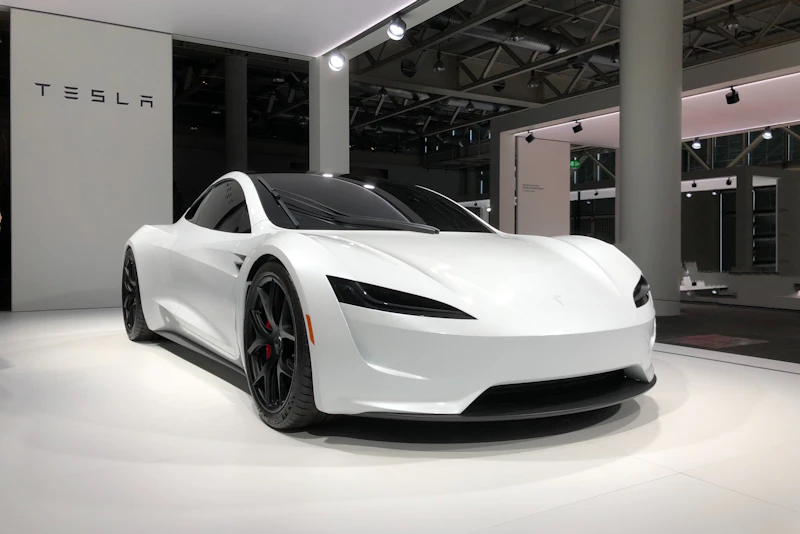 Generative AI and real-time neural diagnostics are replacing mechanical check engine lights with predictive maintenance profiles
From "Check Engine" to AI-Driven Predictive Car Maintenance
For decades, the "Check Engine" light has been a mysterious, anxiety-inducing nightmare for every driver worldwide. It is a binary, reactive relic of 20th-century automotive design: it tells you that a failure has already occurred, but it completely conceals what the issue is, why it happened, or how severe it might be until you physically tow the vehicle to a specialized workshop. If a sensor reads an out-of-bounds parameter, the vehicle logs a Diagnostic Trouble Code (DTC) and flashes an amber warning on your instrument cluster. By then, mechanical damage is frequently already underway, resulting in costly reactive component replacements and unexpected vehicle downtime
Entering 2026, the global automotive ecosystem is undergoing a monumental paradigm shift away from this outdated, corrective strategy. Thanks to the integration of deep artificial intelligence within automotive engineering, we are witnessing the death of reactive fault monitoring and the birth of true cognitive orchestration. Modern vehicles no longer wait for physical failure parameters to trip standard thresholds. Instead, they leverage AI-Driven Predictive Car Maintenance frameworks to actively calculate, forecast, and mitigate mechanical wear and electrical degradation long before a physical breakdown can materialize
This structural evolution fundamentally redefines the relationship between a driver and their machine. Instead of a passive collection of steel, copper, and isolated electronic modules waiting to break, the modern vehicle operates as a proactive, highly analytical computing environment. It understands its own mechanical baselines, tracks its own structural health indexes, and acts as its own master technician
"Predictive neural networks transform vehicle maintenance from an unpredictable financial penalty into a background software operation"
How Neural Networks Read Your Car’s Micro-Telemetry
At the core of this transition are deep neural network (DNN) architectures running onboard edge-computing platforms and continuous cloud sync backends. Traditional Electronic Control Units (ECUs) monitor single variables—such as coolant temperature, oxygen ratios, or oil pressure—in total isolation. In contrast, neural diagnostic systems process thousands of synchronized data streams concurrently via complex sensor fusion algorithms
Neural networks analyze high-frequency time-series telemetry across multiple domains simultaneously
- Acoustic & Vibration Analysis: Ultrasonic sensors and piezoelectric accelerometers detect minute micro-vibrations in motor bearings, gearbox gear teeth, and suspension bushings before human ears can register sound changes
- Thermal Profiling: Neural networks map dynamic heat distribution across electric motor windings, high-voltage battery packs, and power electronics, spotting localized thermal anomalies long before overheating occurs
- Electrical Signature Analysis (ESA): By measuring infinitesimal fluctuations in current draw and voltage ripple, neural models evaluate the health of pumps, actuators, and sensor harnesses dynamically
Key Industry Impact: Maintenance Efficiency in 2026Recent automotive benchmark studies indicate that edge-based neural diagnostic systems reduce unexpected mechanical breakdowns by up to 42% and lower long-term component repair costs by 30% across Software-Defined Vehicle (SDV) fleets
Digital Twins: The Virtual Model Predicting Physical Failure
A crucial breakthrough enabling neural diagnostics is the deployment of Digital Twin technology. For every physical vehicle operating on the road, automotive manufacturers maintain a cloud-based mathematical twin that mirrors the car’s real-world history, driving style, environmental conditions, and component wear rates
Whenever you drive—whether commuting in severe desert heat or navigating freezing mountain passes—the neural network updates your car's virtual twin in real time. Machine learning algorithms run continuous simulation loops against this twin to predict the precise remaining useful life (RUL) of crucial parts, such as brake pads, inverter capacitors, and turbocharger bearings
 Cloud-connected neural models simulate component longevity using real-time sensor streams and digital twin telemetry
Generative AI as Your Personal Mechanic
While deep neural networks process raw sensory signals, Large Language Models (LLMs) and Vision-Language-Action (VLA) frameworks translate those complex metrics into actionable insights for human drivers. In 2026, when your car identifies a potential issue, it doesn't display a cryptic yellow light or obscure error code. Instead, your onboard Generative AI assistant provides a clear, natural language explanation
"Notice: I have detected a 14% micro-efficiency drop in the front-left brake caliper piston due to minor thermal degradation. Your safety is not compromised. I have automatically scheduled a part delivery to your local service center and reserved a 15-minute slot for replacement during your next scheduled routine service"
Furthermore, these AI agents can issue Over-The-Air (OTA) software patches to bypass hardware bottlenecks dynamically. If an electric drive inverter shows early signs of thermal stress, the neural network can instantly rebalance power distribution to secondary drive units, preserving vehicle functionality without requiring immediate emergency roadside assistance
The Road Ahead for Automotive Maintenance
The convergence of neural networks, predictive edge-computing, and Generative AI marks the end of reactive repairs. As Software-Defined Vehicles become the standard, mechanical failure is transitioning from an unpredictable crisis into a managed, automated background process. Vehicle diagnostics is no longer about detecting what went wrong—it is about ensuring nothing goes wrong in the first place


Comments
Post a Comment
We welcome your opinions and constructive discussions.