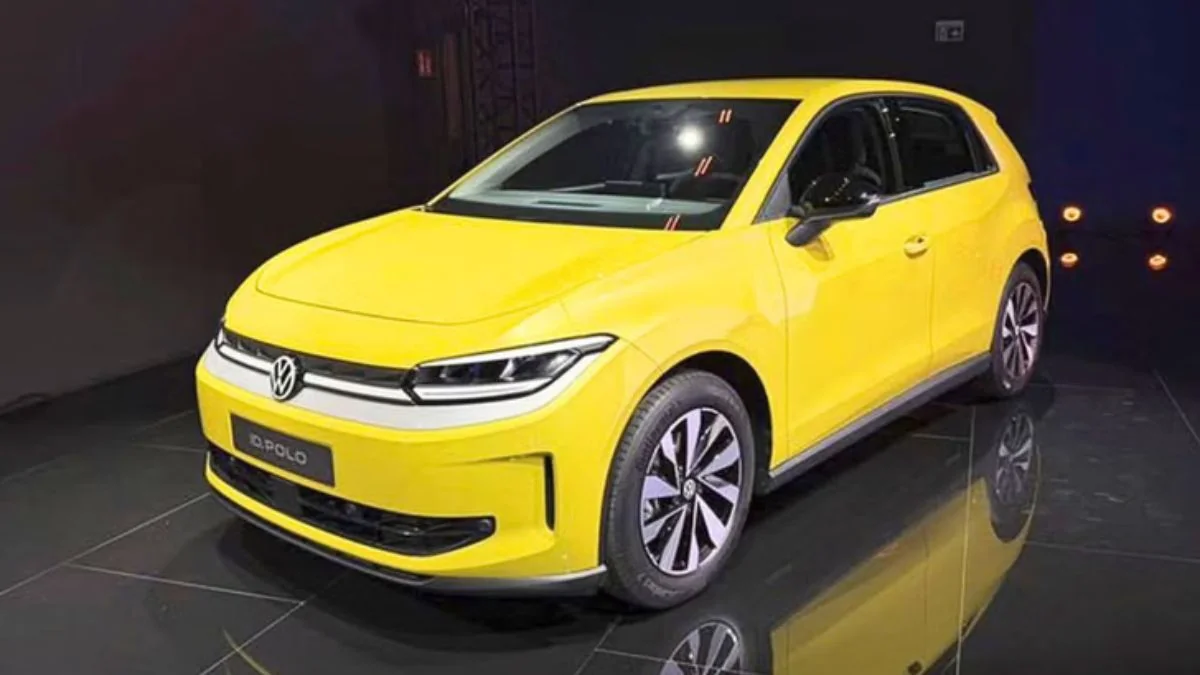
The global automotive landscape in 2026 is undergoing a seismic structural pivot. For years, the narrative surrounding electric mobility was dominated by premium long-range crossovers, high-performance dual-motor SUVs, and expensive battery chemistries that restricted mass-market adoption. Today, the conversation has fundamentally shifted toward urban affordability, electrical infrastructure optimization, and scalable modular platforms. At the center of this transformation stands the highly anticipated Volkswagen ID. Polo—a vehicle designed to democratize electric driving across Europe and worldwide markets.
As automakers face aggressive pricing competition, changing government subsidies, and fluctuating raw material costs, the sub-€25,000 electric vehicle sector has become the definitive battleground. The Volkswagen ID. Polo is not merely another entry-level hatchback; it represents Volkswagen’s tactical response to fast-moving Chinese electric offerings like the Xpeng L03, alongside established category leaders such as the Tesla Model Y and premium family contenders like the upcoming Volvo EX60.
In this deep-dive analysis, we break down the engineering fundamentals of the Volkswagen ID. Polo, evaluate its MEB Entry platform architecture, analyze competitive market dynamics using real-world data points, and examine how bidirectional charging and solid-state innovations are rewriting the rules of modern automotive ownership.
Core Topics Covered in This Guide
• Volkswagen ID. Polo price and specs • Affordable electric hatchback 2026 • MEB Entry platform architecture • Xpeng L03 vs Tesla Model Y comparison • LFP vs Solid-State battery durability • Smart Dash Cam recommendations • Bidirectional V2G charging integration.
1. The Macro Economics of the €25,000 Electric Vehicle
To understand why the Volkswagen ID. Polo is critical to Volkswagen’s long-term enterprise health, one must look at consumer purchasing metrics over the last three years. While luxury and mid-size EV segments reached market saturation in early 2025, mass-market suburban and urban commuters remained hesitant due to inflated acquisition costs. The primary barrier was never a lack of consumer desire for clean energy; it was the sheer financial disconnect between legacy internal combustion engine (ICE) pricing and first-generation electric architectures.
Achieving a profitable sub-€25,000 price point requires radical design-for-cost engineering. Volkswagen achieved this through its newly refined MEB Entry platform. Unlike the standard MEB architecture powering the larger ID.4 and ID.5—which utilizes rear-wheel-drive configurations as standard—the MEB Entry platform shifts the drive unit to the front wheels. This layout consolidates power electronics, electric motors, and single-speed transmissions into a compact front engine bay, dramatically reducing high-voltage cable runs and simplifying assembly line integration.
Furthermore, battery cell chemistry selection plays a decisive role. By leveraging Lithium Iron Phosphate (LFP) chemistry for base trims and reserve Nickel Manganese Cobalt (NMC) cells for higher-range variants, Volkswagen balances cost efficiency with localized climate performance. LFP cells offer exceptional thermal stability, extended cycle life (exceeding 3,000 full charge cycles), and zero reliance on high-cost cobalt reserves.
Key Engineering Takeaway: MEB Entry Architecture
Front-wheel drive layout saves approximately 12% in manufacturing complexity and spatial overhead, freeing up internal cabin volume to match legacy C-segment space within a compact B-segment exterior footprint.
2. 2026 Competitive Intelligence: Technical Benchmark
How does the Volkswagen ID. Polo perform against its primary global rivals? Below is an exhaustive technical matrix comparing four distinct automotive paradigms: the budget-focused urban commuter (VW ID. Polo), the Chinese value tech-titan (Xpeng L03), the global high-volume benchmark (Tesla Model Y LR), and the Swedish luxury safety crossover (Volvo EX60).
| Vehicle Model |
Target Market Segment |
Starting Price (Europe) |
Maximum Range (WLTP) |
DC Fast Charge Speed |
Core Tech Highlight |
| Volkswagen ID. Polo |
Budget Urban Commuters |
€24,995 (~$29,000) |
450 km (280 Miles) |
125 kW (10-80% in 20 min) |
MEB Entry / Compact LFP |
| Xpeng L03 |
Mass-Market Tech Enthusiasts |
€35,600 (~$38,600) |
580 km (360 Miles) |
280 kW (10-80% in 15 min) |
800V SiC Architecture / XNGP |
| Tesla Model Y (LR) |
Premium Established Tech |
€48,500 (~$52,200) |
533 km (330 Miles) |
250 kW V4 Supercharger |
FSD Hardware 4.0 / Mega-Castings |
| Volvo EX60 |
Luxury Family & Safety Focus |
€58,000 (~$62,500) |
600 km (372 Miles) |
300 kW (10-80% in 14 min) |
SPA2 Platform / Luminar LiDAR |
Note: Specifications represent 2026 European homologation data. DC fast-charging rates are subject to ambient battery conditioning and charging station thermal performance.
3. Interior Ergonomics, Software Architecture, and User Experience
One of the biggest criticisms of early Volkswagen ID vehicles—such as the early ID.3 iterations—was the complete reliance on capacitive touch sliders and unresponsive infotainment software. Volkswagen management listened carefully to global customer feedback when designing the ID. Polo interior.
A Return to Tactile Physical Controls
In the ID. Polo, physical HVAC controls and backlit steering wheel buttons have made a prominent comeback. Rather than hiding basic climate adjustments inside nested display menus, driver ergonomics are prioritized with tactile switches. This design update directly enhances driving safety by reducing visual distraction off the road.
Next-Gen MIB4 Infotainment & AI Integration
The center dashboard is anchored by a crisp 12.9-inch floating tablet display powered by VW’s latest MIB4 operating system. The interface is significantly faster than its predecessors, featuring zero latency during route recalculations and integrated EV trip planning that automatically calculates charging stops based on real-time battery temperatures and station availability. Furthermore, native cloud AI speech processing allows drivers to adjust climate, navigation, and cabin ambient lighting using natural spoken English commands.
Upgrade Your Daily EV Commute
Maximize your charging efficiency at home with level-2 smart home chargers equipped with Wi-Fi scheduling and energy metering.
Explore Smart EV Chargers (Affiliate)
4. Bidirectional Charging (V2G) & Grid Integration
A critical technology enabling vehicles like the Volkswagen ID. Polo to act as stabilizing forces for municipal electrical grids is Bidirectional Charging. In 2026, electric cars are no longer passive power consumers; they are mobile, distributed energy storage units.
During peak daylight hours when renewable solar and wind generation surges, grid electricity rates fall to near-zero or negative thresholds. The ID. Polo can automatically charge its battery bank during these low-cost windows. Conversely, during peak evening hours when household demand strains local transformers, Vehicle-to-Home (V2H) systems can draw clean energy from the car to power home appliances, dramatically slashing monthly residential energy bills.
[Peak Solar/Wind Hours (Afternoon)] --> [Grid Surplus Energy] --> [Vehicle Battery Charges at Low Cost]
↓
[Peak Demand Hours (Evening)] --> [Vehicle-to-Home (V2H)] --> [Powers Household Appliances & Cuts Bills]
5. Consumer Decision Triggers: Which EV Fits Your Profile?
Choosing the right electric vehicle in 2026 depends heavily on individual driving patterns, charging infrastructure availability, and personal budgetary limits. Here is how the market divides:
- The Commuter Realist (Volkswagen ID. Polo): Ideal for urban drivers, multi-car households, and budget-conscious buyers seeking proven German build quality, sub-€25k pricing, and manageable insurance categories.
- The Value Tech-Enthusiast (Xpeng L03): Designed for drivers who demand cutting-edge 800V fast-charging speeds (10-80% in 15 minutes) and advanced autonomous highway navigation assistance without paying traditional luxury premiums.
- The Established Trendsetter (Tesla Model Y): The go-to choice for families needing expansive cargo capacity, seamless Supercharger network integration, and high resale liquidity across global markets.
- The Long-Distance Luxury Seeker (Volvo EX60): Perfect for premium buyers prioritizing structural crash protection, sustainable interior textiles, and extended 600 km inter-city ranges.
Keep Your EV Interior Impeccable
Protect your vehicle's footwells against dirt, spills, and wear with all-weather precision-fit floor mats tailored for electric vehicles.
Get Custom All-Weather Mats (Amazon)
6. Summary & Final Market Verdict
The launch of the Volkswagen ID. Polo marks a vital turning point in the electrification journey. By combining a practical 450 km range, updated physical interior ergonomics, standard safety systems, and a accessible price starting under €25,000, Volkswagen proves that clean mobility no longer requires financial compromise. As competition intensifies, consumers stand out as the ultimate winners, gaining access to safer, smarter, and significantly more affordable electric cars than ever befor



Comments
Post a Comment
We welcome your opinions and constructive discussions.