Exploring the frontier of AI, Software-Defined Vehicles, and Neural Networks. Professional insights into the future of automotive technology.EVs, AI Automotive,
Agentic AI Revolution: Multi-Agent Systems & Enterprise Architecture The Agentic AI Revolution: Architecture, Multi-Agent Systems, and the Future of Enterprise Productivity 1. Introduction: Shifting From Passive Prompts to Autonomous Execution For the past few years, the landscape of digital content creation, software engineering, and enterprise automation has been fundamentally dominated by traditional generative AI models. Users worldwide established a deterministic pattern of interaction: the "Prompt-and-Response" model. You type an instruction into an interface powered by a Large Language Model (LLM), and it gives you a static textual or graphical generation. While revolutionary at the time, this interaction mechanism suffers from a structural bottleneck—it relies entirely on continuous, linear human intervention to string complex processes together. As we move through 2026, the paradigm is undergoing an irreversible, non-linear shift toward Agentic A...
Get link
Facebook
X
Pinterest
Email
Other Apps
Tesla FSD vs. Chinese Rivals: The Great Autonomous Philosophy Divide of 2026
Get link
Facebook
X
Pinterest
Email
Other Apps
-
Tesla FSD vs. Chinese Rivals: The Great Autonomous Philosophy Divide of 2026
In-Depth Industry Analysis • Global EV Sector Transformation
Tesla FSD vs. Chinese Rivals: The Great Autonomous Philosophy Divide of 2026
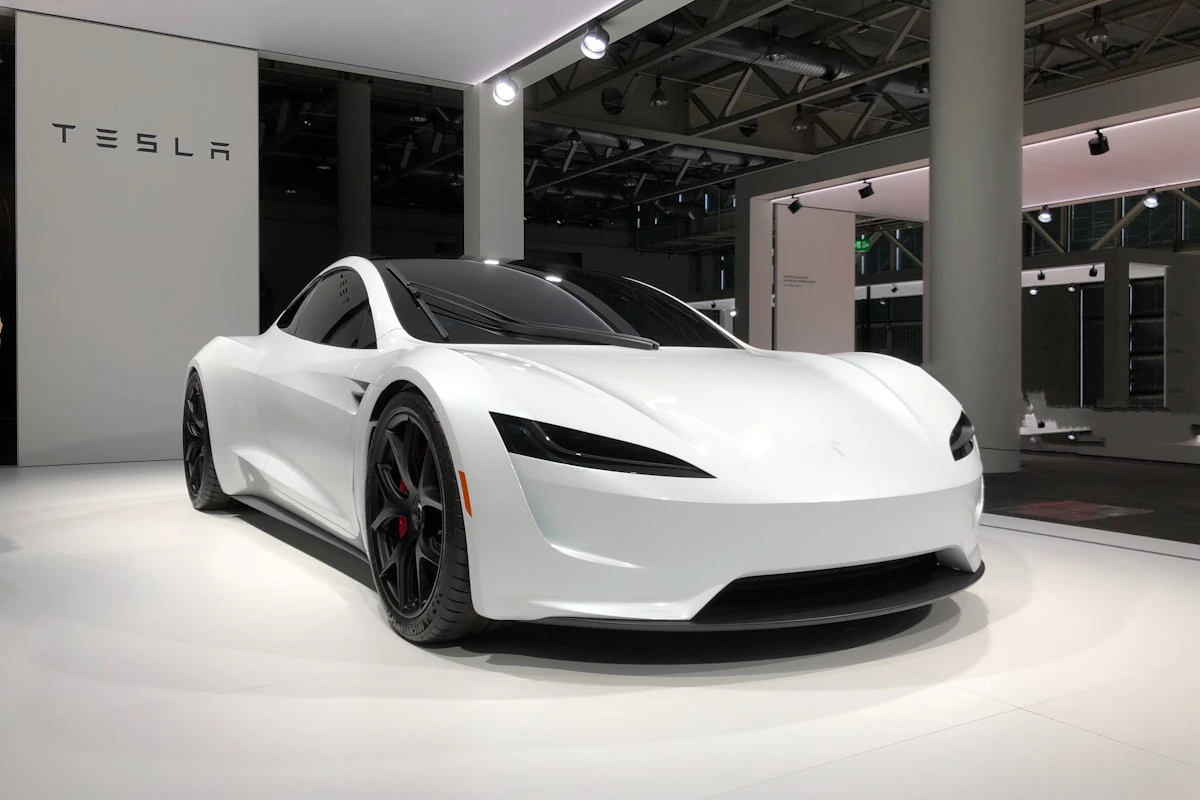
In 2026, the global automotive ecosystem is experiencing a profound technological polarization. The long-anticipated race for scalable, safe, and commercialized autonomous driving technology has escalated past the phase of minor engineering experiments and limited pilots. Today, it stands as a full-scale, multi-billion-dollar industrial and geopolitical war. At the epicentre of this disruption is an absolute, uncompromising philosophical divide. On one side stands North America's tech titan, Tesla, with its absolute commitment to a vision-only, software-centric approach. On the opposing side stands a highly aggressive coalition of Chinese electric vehicle (EV) manufacturers and computing giants—including Xpeng, Huawei, NIO, and Xiaomi—who are building their future on multi-modal sensor fusion and heavy physical hardware redundancy.
This deep architectural rift is far more complex than a simple corporate argument over sensor selection or component costs. It presents two completely different methodologies for how an artificial intelligence should perceive physical reality, how computational loads should be optimized at the edge, and how safety validation must adapt to diverse global regulatory frameworks. As urban environments grow denser and software-defined vehicles (SDVs) fast become the standard of modern consumer transit, analyzing this strategic split offers an invaluable window into who will command the highways and urban corridors of tomorrow.
1. The Philosophical Genesis: Biological Mimicry vs. Absolute Sensor Redundancy
Every autonomous platform begins with a core question: How should a machine perceive the physical world? The answers chosen by Western and Eastern engineers reflect starkly contrasting views on risk management, machine learning limitations, and environmental complexity.
Tesla’s entire development strategy operates on a singular, elegant premise originally championed by Elon Musk: human beings navigate complex, dynamic spatial environments using just two biological cameras (eyes) connected to an organic neural processing engine (the brain). Therefore, the engineering team argues, any artificial intelligence tasked with operating a vehicle should mirror this biological baseline. According to Tesla, adding extra active emission layers—such as Light Detection and Ranging (LiDAR) or radio wave detection (Radar)—introduces structural noise, structural contradictions, and severe data-processing bottlenecks.
Tesla’s contemporary autonomous stack depends completely on an array of high-resolution cameras that stream real-time visual feeds into unified neural networks. By intentionally removing all secondary active sensor layers, Tesla forces its machine learning models to solve the structural depth-perception problem entirely from raw pixel inputs. The ultimate goal is a leaner, highly integrated artificial intelligence pipeline that avoids the architectural friction of merging conflicting data streams, operating under the assumption that if an AI can truly "understand" pixels, it can navigate any environment on Earth.
The Chinese Counter-Argument: Engineering a Super-Human Layer
In stark contrast, Chinese original equipment manufacturers (OEMs) and software architects reject the idea that human biological driving capability is the gold standard. They argue that human visual perception is fundamentally flawed, as evidenced by millions of automotive collisions, fatalities, and lapses in judgment globally each year. For Chinese tech giants, an autonomous driving system shouldn't merely replicate human sight; it must deliver a super-human shield of absolute perceptual certainty.
Figure 2: Laser point cloud processing visualizing obstacles with absolute geometrical measurement precision.
This perspective is heavily reinforced by the operational reality of Chinese megacities. Urban centers like Shanghai, Guangzhou, Shenzhen, and even expanding metropolitan markets like Giza, feature hyper-dense, unpredictable traffic conditions. These streets are filled with tens of thousands of electric scooters, informal delivery three-wheelers, unmapped construction sites, and intense pedestrian movements that defy standard traffic rules. To navigate this extreme spatial chaos safely, Chinese manufacturers believe visual data must be backed by active laser distance scanning, centimeter-level satellite positioning, and instant localized mapping, leaving no room for visual ambiguity or pixel-level interpretation errors.
2. A Technical Deep-Dive into Competing Hardware and Software Stacks
When we peer past the marketing language and inspect the actual code bases, computer chip layouts, and sensor modules deployed in 2026, the structural divergence between these two approaches becomes even more stark.
Tesla's End-to-End Neural Networks (FSD v14 and Beyond)
Tesla’s Full Self-Driving (FSD) architecture represents a massive paradigm shift in robotics programming. Traditional autonomous vehicle development relied extensively on heuristic code—millions of lines of manually written "if-then" safety rules crafted by software engineers to handle specific scenarios. Tesla has fundamentally dismantled this approach, replacing it with a pure, holistic end-to-end neural network framework.
In this modern setup, raw, uncompressed camera pixels enter the neural network as the direct input layer, and control parameters (steering wheel angle, regenerative braking pressure, torque vectors) are output directly by the model. The network is trained through massive imitation learning, ingesting billions of miles of high-quality video data harvested from millions of customer-owned Tesla vehicles around the globe. When a vehicle encounters a complex scenario, it doesn't consult a coded rulebook; it outputs a behavior based on how the most skilled human drivers across the fleet reacted in similar visual environments, relying on deep, generalized intelligence rather than pre-programmed logic.
The Chinese Multi-Modal Fortress: LiDAR, HD Mapping, and V2X Infrastructures
Chinese autonomous software platforms build a multi-layered perception fortress using three core technologies: high-channel solid-state LiDAR, real-time HD maps, and Vehicle-to-Everything (V2X) communication arrays. Companies like Huawei (with its Qiankun ADAS) and Xpeng (deploying its advanced VLA Architecture) equip their vehicles with top-tier 192-line or 256-line solid-state LiDAR systems.
These LiDAR units emit millions of photons per second, creating a real-time, highly accurate 3D point cloud of the surrounding environment. This spatial framework functions completely independently of external lighting conditions, allowing the car to see perfect geometric structures in pitch-black tunnels, blinding headlamp glare, or dense fog. Furthermore, these vehicles stream highly precise HD maps from the cloud, cross-referencing road boundaries down to the millimeter. This is paired with V2X hardware that communicates directly with intelligent traffic lights and municipal grid sensors, allowing the car to anticipate lane closures and light changes before they ever enter the line of sight of any onboard camera.
3. Comprehensive Comparative Architectural Matrix
To fully grasp the dynamics of this intense global EV industry war, we must systematically evaluate both architectural strategies across key performance and structural vectors:
Minimal (Sub-$1000 total manufacturing hardware cost)
Moderate to High (Laser units and HD mapping licensing costs)
Unstructured Traffic Handling
Relies on network generalization and visual data inference
Relies on exact geometric obstacle mapping and edge computing tracking
Regulatory Verification Track
Complex statistical validation based on disengagement miles
Deterministic verification through precise structural mapping matching
4. Hardware Constraints and Strategic Business Trade-offs
Every choice in automotive engineering involves deep strategic trade-offs. Neither paradigm is universally flawless; instead, each optimizes for a completely different set of initial resources, market conditions, and scaling speeds.
Tesla’s Advantage: Exponential Fleet Scaling and Low Unit Costs
Tesla’s clear competitive edge lies in the pure economics of manufacturing and capital monetization. By completely eliminating expensive laser sensors, mechanical radar assemblies, and costly localized map licensing fees, Tesla maintains a remarkably low Bill of Materials (BOM) for its autonomous driving hardware. Every single vehicle that leaves Tesla's factories—whether a mass-market Model 3 or a rugged Cybertruck—is instantly equipped with the exact same affordable camera layout.
This creates an unparalleled data flywheel. As Tesla sells hundreds of thousands of vehicles monthly, its real-world training dataset grows exponentially larger than any competitor's. Additionally, this approach bypasses the notorious "sensor conflict" challenge. In sensor-fusion architectures, a camera might interpret a shadow as open road, while an improperly calibrated radar flags it as a physical wall. Resolving these conflicting data tracks in milliseconds requires immense computing power and can create erratic vehicle behaviors. By relying entirely on vision, Tesla’s neural networks enjoy an integrated, singular source of absolute truth: the pixel stream.
China’s Counter-Punch: Immediate Geometric Safety and Compute Dominance
Chinese manufacturers counter Tesla's economic scale by offering unmatched spatial precision, specifically when handling hazardous "edge cases" that fall outside standard training data. In hyper-dense, developing traffic systems, formal traffic regulations are often secondary to real-time road negotiations. Mopeds frequently ride against traffic flows, cargo vehicles carry highly irregular, asymmetric loads, and construction barriers can appear overnight without any warning or signage.
In these challenging settings, a vision-only system must accurately identify the unusual visual object and correctly infer its distance via software calculations. If the neural network has never encountered an object of that specific shape or texture before, it can potentially miscalculate. A Chinese ADAS platform completely eliminates this vulnerability through its LiDAR layer. The laser array doesn't need to recognize or categorize what an object is; it instantly registers that a solid mass is occupying physical space in front of the vehicle. This provides an immediate, foolproof safety fallback. To process these massive multi-modal data streams without latency, Chinese firms are installing immense computing power. Xpeng’s proprietary Turing AI chip delivers an astonishing 3000 TOPS of compute power, allowing the vehicle to cross-validate multiple perception layers simultaneously and maintain safety in the most chaotic driving environments.
5. Real-World Deployment Progress: The 2026 Competitive Landscape
The year 2026 has transitioned these abstract engineering concepts into direct, commercial competition on public roads. The rollout of mass robotaxi services and premium consumer autonomy packages has highlighted exactly how these systems perform under real-world economic and environmental conditions.
Tesla has utilized its low-cost vision architecture to scale the deployment of its dedicated Cybercab fleet. By relying exclusively on vision, Tesla aims to demonstrate that true Level 4 autonomy can be launched globally without needing expensive local infrastructure upgrades or high-definition mapping support. However, initial deployments have remained concentrated within carefully reviewed geo-fenced areas in major American sunbelt hubs like Austin, Phoenix, and Dallas, as the system works to prove that raw data volume can effectively mitigate the absence of active laser sensors.
Concurrently, Chinese tech leaders have turned their domestic markets into highly advanced testing grounds for autonomous mobility. Huawei's Qiankun ADAS ecosystem and Xpeng’s VLA platforms are navigating high-density city grids with remarkable consistency. These multi-modal vehicles routinely manage chaotic traffic scenarios that overwhelm vision-only systems, demonstrating that sensor-fusion is exceptionally well-suited for the complex, unstructured driving environments common across the Global South and rapidly expanding metropolitan areas worldwide.
6. Strategic Conclusion: Who Will Claim the Global Autonomy Crown?
The historical standoff between Tesla's Vision-Only minimalist approach and China's Multi-Modal Sensor Fusion framework will eventually be decided by two definitive factors: data generalization capability and cross-border regulatory harmonization. The ultimate winner will not simply be the company that designs the most elegant neural network architecture, but the one that adapts most efficiently to the messy infrastructure realities of global roadways.
Tesla possesses a massive advantage in fleet scale and continuous data collection, yet its reliance on visual clarity demands massive neural model training to handle unpredictable environments. Conversely, China’s tech giants offer bulletproof spatial precision through dense sensor arrays, backed by state-supported smart city integration. For global car buyers navigating the automotive landscape of 2026, the final choice is clear: Do you place your trust in the deeply trained, all-seeing digital eye of Tesla's neural network, or the highly redundant, laser-mapped safety net of the Chinese tech giants?
Explore some of our most popular and deeply researched tech articles on Future Tech Car. Click on any topic to dive in:
AMAZON AFFILIATE SPOTLIGHT
REDTIGER F7NP 4K Front and Rear Car Camera
Equipped with dual Sony STARVIS 2 Sensors, built-in 5.8GHz Wi-Fi, and real-time GPS logging. Perfect for advanced environmental telemetry and secure 24H parking monitoring.
Published by: Rabie Abdulrahman | Category: Automotive AI & Next-Gen Mobility Introduction: The Automotive Paradigm Shift The global automotive industry is undergoing its most radical transformation since the invention of the assembly line. We are moving away from traditional mechanical engineering toward advanced computing infrastructure. At the heart of this revolution lies the concept of Software-Defined Vehicles (SDVs) and the sophisticated autonomous driving AI platforms that power them. Today’s luxury electric vehicles are no longer just transportation machines; they are essentially high-performance data centers on wheels, utilizing intricate neural networks to navigate complex real-world environments. For modern tech innovators and digital creators, understanding this architectural shift is crucial. If you are exploring how artificial intelligence is rewriting traditional busi...
Artificial Intelligence (AI) is no longer a futuristic concept confined to science fiction novels or high-tech laboratories; it has officially arrived on public highways and suburban streets. Over the past decade, the global automotive industry has undergone a massive digital transformation, transitioning from traditional mechanical engineering to advanced software-defined vehicle architecture. Modern vehicles are rapidly evolving into sophisticated, highly connected supercomputers on wheels. From predictive maintenance algorithms and real-time cloud analytics to cloud-connected infotainment units and Advanced Driver-Assistance Systems (ADAS), artificial intelligence is fundamentally redefining how human beings interact with, maintain, and drive their automobiles However, alongside this unprecedented wave of technological innovation comes a significant wave of consumer uncertainty, skepticism, and technical curiosity. Everyday drivers, prospective vehicle buyers, and t...
Agentic AI Revolution: Multi-Agent Systems & Enterprise Architecture The Agentic AI Revolution: Architecture, Multi-Agent Systems, and the Future of Enterprise Productivity 1. Introduction: Shifting From Passive Prompts to Autonomous Execution For the past few years, the landscape of digital content creation, software engineering, and enterprise automation has been fundamentally dominated by traditional generative AI models. Users worldwide established a deterministic pattern of interaction: the "Prompt-and-Response" model. You type an instruction into an interface powered by a Large Language Model (LLM), and it gives you a static textual or graphical generation. While revolutionary at the time, this interaction mechanism suffers from a structural bottleneck—it relies entirely on continuous, linear human intervention to string complex processes together. As we move through 2026, the paradigm is undergoing an irreversible, non-linear shift toward Agentic A...



Comments
Post a Comment
We welcome your opinions and constructive discussions.